Contents:
- Why bond size matters at all
- The three sizes, compared
- Standard keratin bonds
- Micro bonds
- Nano bonds
- How to choose: a simple three-question test
- What an expert says about it
- How the fitting actually goes
- What it costs to keep them looking good
- Exceptions and nuances
- Mixing sizes in one head
- Hair that is already damaged
- Scalp sensitivity
- A seasonal timeline for beginners
- Care that applies to all three sizes
- FAQ
- Which bond size lasts longest?
- Do keratin bonds damage your natural hair?
- Are nano bonds worth the extra cost?
- Can I swim and exercise with keratin bonds?
- How many hours does a fitting take?
- Choosing the right keratin bond hair extensions
Here is the myth that costs people the most money: smaller bonds are always better, so everybody should simply book the tiniest ones on the menu. They are not, and they should not. Bond size is a decision about your hair, not a ranking of quality. Let’s set the record straight on keratin bond hair extensions before you spend a penny.
The short answer: choose standard bonds if your hair is thick and you want durability, micro bonds if your hair is medium or fine and you want a discreet finish, and nano bonds if your hair is very fine, short or you need the lightest possible hold. Everything else is detail, and the detail is where good results are made.
Why bond size matters at all
Every strand of extension hair is attached to a strand of your own hair with a small tip of keratin, the same protein your hair is made of. The tip is warmed, clamped around the join and left to set. The bigger the bond, the more weight sits on one root. A single strand of fine hair cannot comfortably carry the same load as a strand of coarse hair, so a bond that suits one head will pull on another.
That is the whole reason three sizes exist. Weight, visibility and wear time all move together, and each size trades one against the others.
The three sizes, compared
Standard keratin bonds
These are the classic bonds, roughly the size of a grain of rice. They hold the most weight, tolerate heavy styling and tend to last longest between maintenance appointments. On thick, strong hair they are very comfortable. On fine hair they can be seen when the hair is tied up or parted, and they can tug at the root.
- Best for: thick or coarse hair, long extensions, people who style with heat several times a week.
- Trade-off: the most noticeable of the three when hair is worn up.
Micro bonds
Micro bonds sit in the middle, and for most beginners they are the sensible default. They are smaller and lighter, so they disappear more easily into the hair, and you need more of them to reach the same density. That extra fitting time is the reason they usually cost more than standard bonds. Our guide to micro bond hair extensions covers how they behave in daily wear in more depth.
- Best for: medium or fine hair, shoulder-length to mid-back lengths, anyone who wants to wear their hair up without worry.
- Trade-off: a longer appointment and a slightly higher price than standard.
Nano bonds
Nano bonds are the smallest, often little more than a speck at the root. They place the least strain on the scalp and are the hardest to see, which makes them the usual answer for very fine hair, a receding hairline area, or short cuts where larger bonds would show. The cost is time: a full head takes the longest to fit. If this is the profile you are in, the nano bond hair extensions by Ivana Farisei page explains how the method is fitted and who it suits.
- Best for: fine, thin or short hair, sensitive scalps, people who want invisible results.
- Trade-off: the longest fitting appointment, and slightly less holding power under very heavy hair.
How to choose: a simple three-question test
- How thick is a single strand? Roll one strand between your fingers. If you can barely feel it, start with nano. If it feels springy and substantial, standard is safe.
- How do you wear your hair? Ponytails, buns and half-up styles expose the bonds at the nape and crown. The more you tie it up, the smaller the bond should be.
- How long do you want the extensions to be? Longer hair is heavier. A 22-inch length needs a stronger anchor than a 16-inch one.
Two of those three answers pointing in the same direction is usually enough. When they disagree, ask a stylist to look at the hair in person, because photos hide density and breakage.
What an expert says about it
Hair-extension specialist Marianne Holt, who holds a Level 3 qualification in hair extension application, puts it this way: “People ask me which bond is best. I ask them what their hair is doing today. Fine, fragile hair needs the lightest bond. Thick, healthy hair does not need to be babied, and I would rather give it a durable standard bond than overcomplicate the job.”
That attitude, matching the method to the head and not the other way round, is what separates a considered fitting from a menu choice. It is also the approach I have found at Ivana Farisei, where the starting point is always the condition of your own hair, not a package.
How the fitting actually goes
Knowing what happens in the chair removes most of the nerves. A typical fitting runs in four stages, and the stylists at Ivana Farisei walk clients through each one as they go.
- Consultation and colour match. The stylist checks density, strand thickness and scalp condition, then matches the extension shade in daylight, not under salon lights.
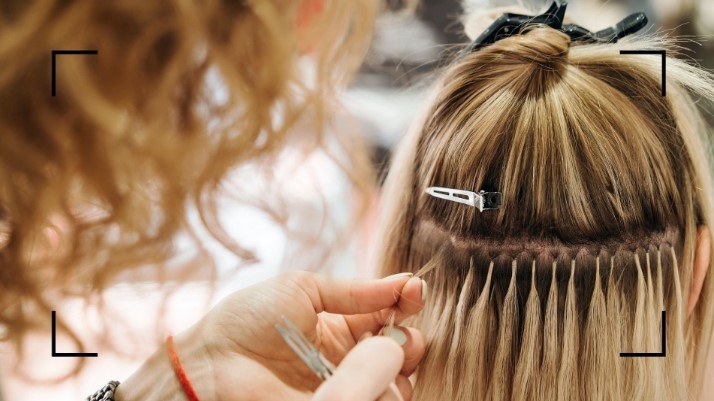
- Sectioning. Your hair is divided into thin horizontal sections so the bonds sit in a staggered line and never stack on top of each other.
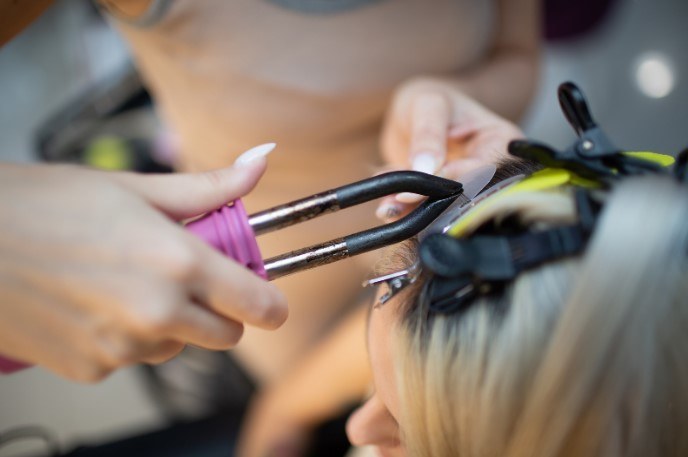
- Bonding. Each extension strand is warmed at the keratin tip, joined to a small amount of your own hair and rolled flat. Nothing should feel hot or tight.
- Blending and cut. Once everything is in, the length and layers are cut so the extension hair and your own hair move as one.
Expect to feel gentle tension for the first two or three days as the scalp gets used to the weight. Persistent pain or itching beyond that is not normal and is worth a call to the salon.
What it costs to keep them looking good
The fitting is the headline price, but the real cost of extensions is spread across the following months. Budget for a maintenance appointment every eight to ten weeks, a proper extension brush, a sulphate-free shampoo and a silk or satin pillowcase. Together these add far less than a second fitting would, and they decide whether one set of hair lasts a few months or the best part of a year. Smaller bonds usually cost a little more up front because of the extra time, but they also tend to need fewer corrections on fine hair, so the difference evens out.

Exceptions and nuances
Mixing sizes in one head
Hair is rarely uniform. The hair at the nape and around the hairline is almost always finer than the crown and the sides. A good fitting can use nano bonds where the hair is delicate and micro or standard bonds where it is strong. That blend gives you invisibility where it matters and durability where it counts, and it is a conversation worth having with Ivana Farisei or any specialist who works across all three sizes.
Hair that is already damaged
Bleached, over-processed or recently chemically straightened hair is weaker than it looks. Even the right bond size will struggle on strands that are close to breaking. In that situation the honest advice is to wait, repair and rebook, not to cover the damage with extensions. Any specialist who agrees to fit extensions onto visibly compromised hair without a conversation is selling a short-term look.
Scalp sensitivity
If your scalp is easily irritated or you have a history of traction hair loss, go smaller and fewer. The lower the weight per root, the lower the risk.
A seasonal timeline for beginners
Timing changes how comfortable your extensions are and how much work they need. Use this as a rough calendar for the UK.
- January to February: hats, scarves and hoods rub against the hair and cause friction knots. Brush gently every morning and avoid tying scarves tightly at the nape.
- March to May: an ideal window to book a first fitting. The weather is mild, and a six-to-eight-week maintenance check lands before summer plans.
- June to August: chlorine, salt water and sun dry out both your hair and the extension hair. Rinse with fresh water after swimming and use a leave-in conditioner.
- September to November: a good time for a move-up or refresh before the festive season. Book early, as appointments fill quickly in late autumn.
- December: party styling means more heat and more updos. Expect more tangling and keep a detangling brush in your bag.
Care that applies to all three sizes
- Wash two to three times a week with a sulphate-free shampoo, keeping conditioner away from the bonds themselves.
- Dry the roots thoroughly. Damp bonds can soften and slip.
- Brush from the ends upwards with a loop brush made for extensions, holding the hair above the bond.
- Sleep with the hair in a loose plait or low ponytail to stop knots forming overnight.
- Book maintenance on schedule. Bonds grow down with your hair and need to be moved up, generally every eight to ten weeks, though your stylist will confirm your own timing.
FAQ
Which bond size lasts longest?
Standard bonds hold the most weight and usually stay secure the longest, but longevity also depends on your own hair growth and how well you look after the extensions. Because the hair keeps growing, every bond type needs a move-up appointment.
Do keratin bonds damage your natural hair?
Properly fitted bonds on healthy hair are gentle, and the damage people talk about almost always comes from poor removal, bonds that are too heavy for the strand, or skipped maintenance. Choose the size that suits your hair and have the bonds removed by a professional.
Are nano bonds worth the extra cost?
For fine hair or visible partings, yes, because the finish and comfort are noticeably better. For thick hair that never gets tied up, you may be paying for a benefit you will not notice.
Can I swim and exercise with keratin bonds?
Yes. Rinse after swimming, dry the roots fully and avoid sleeping with wet hair. Heat from a sauna can soften bonds, so keep sessions short.
How many hours does a fitting take?
A full head usually takes anywhere from two to six hours depending on bond size and the number of strands, with nano bonds at the long end of that range.
Choosing the right keratin bond hair extensions
The best keratin bond hair extensions are the ones matched to the strand they are attached to. Thick hair rewards standard bonds, medium hair is happiest with micro, and fine or short hair needs nano. Book a consultation, bring photos of how you wear your hair day to day, and ask for the reasoning behind the size you are offered. A good answer is specific. A vague one is a warning.
At Ivana Farisei, that conversation comes before the appointment is ever priced, and it is the reason clients leave with a bond size they can explain to their friends. Whichever route you take, treat the first consultation as an interview of the stylist as much as a booking.