Contents:
- Why Flower Delivery Etiquette Still Matters
- The Core Rules of Sending Flowers: Timing and Logistics
- Timing Basics
- Getting the Logistics Right
- Occasion by Occasion: When to Send Flowers and How
- Birthdays
- Anniversaries
- Sympathy and Funerals
- Religious Customs to Respect
- Get-Well Flowers and Hospital Rules
- New Baby
- Workplace Flowers
- Apology Flowers
- Thank-You Flowers
- Sympathy Flowers vs. Funeral Flowers: The Comparison People Get Wrong
- What to Include With a Flower Delivery
- The Card: Wording That Works
- Thoughtful Add-Ons
- Care Instructions and Freshness
- Sending Flowers to Men: Yes, Absolutely
- Cultural Taboos and Flower Symbolism
- Chrysanthemums
- Even vs. Odd Stem Counts
- Yellow Flowers
- White Flowers and Other Notes
- Common Mistakes to Avoid
- Practical Tips for Ordering Flowers Like a Pro
- Real Examples: Three Deliveries, Three Decisions
- Example 1: The Coworker in the Hospital
- Example 2: The Friend Who Lost Her Grandmother
- Example 3: The Long-Distance Birthday in Miami
- Flower Etiquette FAQ
- How soon after a death should I send sympathy flowers?
- Is it rude to send flowers to someone at work?
- Should I tip the flower delivery driver?
- What flowers are safest when I don’t know the recipient’s preferences?
- Conclusion: Your Flower Delivery Etiquette Checklist
There’s a myth that refuses to wilt: “It’s the thought that counts, so any flowers, sent any time, are always a good idea.” I love the generosity behind that idea. I also know, from years of watching bouquets arrive at the wrong moment, that it isn’t quite true. A towering arrangement of lilies can get turned away at an ICU door. A dozen yellow roses can land with an awkward thud in a Ukrainian household. A gorgeous wreath can quietly embarrass a Jewish family sitting shiva, where flowers are not part of the tradition at all.
The thought does count. But the thought has to travel through a florist, a delivery driver, a hospital front desk, a culture, and a card message before it reaches the person you care about. Good flower delivery etiquette is simply the craft of making sure your thought survives that trip intact. This guide sets the record straight: when to send, when to hold off, what to write, what to tuck into the box, and the small cultural details that separate a lovely gesture from an accidental faux pas.
Why Flower Delivery Etiquette Still Matters
Flowers are one of the oldest gift languages we have. The Victorians famously built entire dictionaries around them, assigning a meaning to everything from ivy to zinnias. Most of us no longer decode bouquets stem by stem, yet the instinct survives. People still read color, size, timing, and the words on the card as a message, whether you intended one or not.
What has changed is the delivery part. Twenty years ago you called a local shop, described what you wanted, and hoped for the best. Today you can order a same-day bouquet from your phone during a lunch break, send flowers to a city you’ve never visited, and choose between hundreds of designs. That convenience is wonderful, and it also means more room for missteps. You’re no longer chatting with a florist who might ask, “Is this for a hospital room?” You have to ask yourself.
The good news for DIY-minded senders: etiquette here isn’t a rigid rulebook. It’s a handful of principles you can reason through on your own:
- Respect the recipient’s situation. Their space, schedule, health, and beliefs come before your aesthetic preferences.
- Match the scale to the relationship. A coworker and a spouse should not receive the same 100-rose statement piece.
- Make it effortless to receive. Flowers that arrive hydrated, with a vase or a clear care plan, are a gift. Flowers that create chores are a burden.
- Say something real. The card is often remembered longer than the blooms.
Keep those four ideas in your pocket and nearly every scenario below will make sense.
The Core Rules of Sending Flowers: Timing and Logistics
Timing Basics
Timing is the most underrated part of any flower gift. The same bouquet can feel thoughtful or careless depending on when it lands. A few general guidelines:
- Celebrations: Aim for the day itself, ideally the morning, so the recipient enjoys the flowers all day and can show them off.
- Workplace deliveries: Mid-morning on a weekday is the sweet spot. Avoid Friday afternoons, when the bouquet may sit in an empty office all weekend.
- Sympathy: Sooner is generally better for the family home, but there’s also real value in a second delivery two to four weeks later, when the casseroles stop and the quiet sets in.
- Holidays: Valentine’s Day, Mother’s Day, and the weeks before Christmas are the busiest days in floristry. Order several days ahead, because popular varieties sell out and delivery windows fill up.
Getting the Logistics Right
Many failed deliveries have nothing to do with flowers and everything to do with incomplete information. Before you hit “order,” gather:
- The full street address, including apartment or suite number.
- The recipient’s phone number, so the driver can coordinate access.
- Building notes: gate codes, concierge desks, loading docks, or “leave with front desk.”
- The recipient’s schedule. Will they actually be home or at work?
- Any surprise instructions. If it’s a surprise, tell the florist not to call the recipient in advance.
This matters even more in dense, high-rise cities. In South Florida, for example, a huge share of deliveries go to condo towers with front desks and security lists. Florists who work that terrain daily know to ask the right questions. When I order miami flowers delivery, the details I give about the building make as much difference as the bouquet I pick.
Occasion by Occasion: When to Send Flowers and How
Birthdays
Birthdays are the easiest occasion to get right and, oddly, one of the easiest to get wrong through laziness. The classic mistake is ordering the generic “birthday bouquet” without thinking about the person. Does your sister adore soft, romantic tones? Is your best friend a bold, tropical-color person? Personal fit beats tradition every time.
A few birthday guidelines:
- Deliver on the day itself, or the business day before if the birthday falls on a weekend and you’re sending to an office.
- Peach and coral flowers read joyful and celebratory. Peach peonies, for instance, are commonly associated with birthdays.
- For a milestone birthday (30, 50, 75), scale up. A bigger arrangement or a stem count that nods to the age is a fun touch.
- Balloons work well here, as long as the recipient isn’t in a hospital that bans them (more on that below).
Anniversaries
Romantic anniversaries are where red roses earn their reputation, but they are not your only option. Long-married couples often appreciate a bouquet that echoes their wedding flowers more than another dozen reds. If you don’t remember what was in the bridal bouquet, look at the wedding photos. That small piece of detective work is the kind of thing that makes a partner tear up.
For work anniversaries or a friend’s wedding anniversary, keep it lighter: a cheerful mixed bouquet in a vase, a modest size, and a warm note. Deliver to the home, not the office, for romantic anniversaries. Some people love a public declaration at work; many find it uncomfortable. Know your person.
Sympathy and Funerals
This is the occasion where etiquette matters most, because grieving families have no spare energy for awkwardness. The basics:
- To the funeral home or service venue: Arrange delivery for a few hours before the service, or the day before if the funeral director prefers. Always include the full name of the deceased and the service time on the order so staff can place the flowers correctly.
- To the family home: Choose something compact in a vase or a low arrangement that needs no extra work. Grieving people should not be hunting for vases or trimming stems.
- Who sends what: Close family typically sends the larger pieces for the service itself (casket sprays, standing arrangements). Friends, coworkers, and extended family usually send smaller arrangements or sympathy bouquets to the home.
- Colors: White, cream, soft lavender, and pale green are the safe, calm palette in most American settings. Muted pastels are fine too.
Religious Customs to Respect
Before sending anything for a death, check the family’s faith tradition. An obituary or a quick, gentle question to a mutual friend usually gives you the answer. Here’s a broad overview, keeping in mind that individual families vary widely:
- Jewish traditions: Flowers are generally not sent to the funeral or to a shiva home. Simplicity in mourning is valued, and many families consider flowers out of place. Send a food basket, kosher if the family keeps kosher, or make a donation to a charity the family names.
- Muslim traditions: Funerals are typically simple and swift, often within 24 hours, and floral displays are usually not part of the burial. Some families welcome a modest arrangement at home, others prefer none. Meals, donations, and personal visits are often more appreciated.
- Catholic and most Protestant traditions: Flowers are widely welcomed at the wake, the service, and the home. Some Catholic families also appreciate a Mass card.
- Eastern Orthodox traditions: Flowers are customary, and in many Eastern European families an even number of stems is used for mourning (see the taboos section below).
- Hindu traditions: White flowers are associated with mourning, and garlands may be used in the rites. Large showy arrangements are less common; ask the family.
- Buddhist traditions: White and sometimes yellow flowers are appropriate. Red is generally avoided because it’s tied to happiness and celebration.
When in doubt, a handwritten note and a donation in the deceased’s name are never wrong.
Get-Well Flowers and Hospital Rules
Get-well flowers are lovely, but hospitals have become much stricter over the past decade. Many intensive care units, neonatal ICUs, oncology wards, burn units, and transplant floors ban fresh flowers and live plants entirely, because standing water and soil can harbor bacteria and fungi that put immunocompromised patients at risk. Latex balloons are also banned in many hospitals due to latex allergies; foil balloons are usually allowed, but not always.
The practical rule is simple: call the nurses’ station or the hospital’s main line before ordering. Ask whether flowers are allowed on that specific unit and whether deliveries go directly to the room or to a central desk. If flowers are banned, send them to the patient’s home timed for their discharge. That often works out better anyway, because short hospital stays mean a bouquet sent on day one may never make it home.
When flowers are allowed, choose:
- Compact arrangements that fit on a crowded bedside tray.
- Low-fragrance flowers. Strong scents can bother patients dealing with nausea, and roommates may be sensitive too.
- Low-pollen varieties. Skip lilies, which shed heavy pollen and are strongly scented.
- A vase or box design, never loose stems that require the nurse to find a container.
New Baby
New-baby flowers are pure joy, with two caveats. First, timing: hospital stays after birth are short, typically one to two days for a vaginal delivery and two to four after a cesarean. Many parents prefer flowers at home once they’ve settled in, when visitors thin out. Second, babies and strong scents don’t mix well, so steer toward gentle, low-pollen blooms.
The new-baby collection at My Peonika is a good model of how to handle this thoughtfully. Their florists favor compact designs suited to hospital rooms and deliberately avoid strongly fragrant and high-pollen flowers like lilies. Pricing spans from smaller pieces like “Little Wonder” at $131 up to gift sets such as “Hello, Little One” at $257 to $490, with add-ons like plush toys, personalized cards, and satin ribbons. For a baby girl, they lean on pink roses, blush ranunculus, and hydrangeas, which feel tender without being overpowering.
One more etiquette note: congratulate the parents, not just the baby. A card that says “You two are going to be wonderful at this” lands harder than “Welcome, baby!” alone.
Workplace Flowers
Office deliveries need a bit of reconnaissance. Some companies route all packages through a mailroom, where flowers can sit for hours. Others have open-plan floors where a big, perfumed arrangement will annoy six neighbors with allergies. Before sending:
- Confirm the company accepts personal deliveries and find out where they go.
- Pick a low-scent, moderately sized arrangement in a vase.
- Keep the card professional. Assume a receptionist and several colleagues will read it.
- For team gestures (a colleague’s promotion, a new hire, a retirement), sign the card from the group and include names if there’s room.
Managers sending flowers to employees should be especially careful about romance-coded flowers. A dozen red roses from a boss sends a message nobody wants to decode. Choose mixed, bright, or green-and-white designs instead.
Apology Flowers
Flowers can open the door to an apology. They can’t do the apologizing for you. That’s the whole etiquette of apology bouquets in two sentences. Send them after you’ve said sorry in person or by phone, or alongside a heartfelt note that takes real responsibility. An oversized, expensive arrangement can read as an attempt to buy your way out of the conversation, so keep the size modest and the message sincere.
Softer colors tend to work best: white, blush, or lavender. Pink carries associations of gratitude and gentle affection, which suits a friendship repair. Avoid anything that screams celebration.
Thank-You Flowers
Thank-you flowers are wonderfully flexible: for a host after a dinner party, a neighbor who watched your dog, a doctor’s office team, or a mentor who wrote a recommendation. Send them within a week or two of the kindness, while the gesture still feels connected. Coral and pink tones carry gratitude well; coral ranunculus and pink peonies are both commonly tied to thanks. For a dinner host, send flowers the next day rather than bringing a bouquet to the party, which forces the host to stop greeting guests and hunt for a vase.
Sympathy Flowers vs. Funeral Flowers: The Comparison People Get Wrong
These two terms get used interchangeably, and the mix-up causes real problems. A massive standing spray delivered to a small apartment, or a modest vase arrangement placed beside a casket that’s surrounded by family tributes: both happen because the sender didn’t know the difference.
- Funeral flowers go to the funeral home, church, or service venue. They’re designed for display: casket sprays, standing sprays on easels, wreaths, crosses, and large arrangements. They’re typically sent by immediate family, close friends, or organizations. They’re meant to be seen from a distance and to honor the deceased publicly.
- Sympathy flowers go to the family’s home, sometimes days or weeks after the service. They’re smaller, usually in a vase, basket, or as a potted plant, and designed for comfort and daily life. They honor the bereaved, the living, rather than the deceased.
Quick decision guide:
- Are you immediate family or sending on behalf of a group? Funeral flowers to the service are appropriate.
- Are you a friend, colleague, or neighbor? Sympathy flowers to the home are usually the better fit.
- Did you miss the funeral or learn of the death late? Sympathy flowers to the home, sent whenever you find out. Late is far better than never.
- Did the obituary say “in lieu of flowers”? Respect it. Donate, then send a card.
A related confusion worth clearing up: a bouquet is cut stems wrapped in paper or tied, which the recipient must put in water; an arrangement arrives already designed in a vase, box, or basket. For grieving families, hospital patients, and busy offices, arrangements are almost always the kinder choice.
What to Include With a Flower Delivery
The Card: Wording That Works
Write the card yourself, even if you only have room for two lines. Generic preprinted phrases feel hollow next to something specific. Some starting points you can adapt:
- Birthday: “Thirty-five looks good on you. Thank you for every late-night phone call this year. Love, Maya.”
- Anniversary: “Twelve years, two cities, one very loud dog. I’d choose you again every time.”
- Sympathy: “We’re so sorry about your dad. He made every Thanksgiving louder and better. Thinking of you all.”
- Funeral (from a group): “In loving memory of Carol. With deepest sympathy from your friends at the Northside Library.”
- Get well: “Rest, heal, and let everyone else do the dishes for once. Can’t wait to see you up and about.”
- New baby: “Welcome to the world, little Leo. And congratulations to the two people who’ll be getting very little sleep.”
- Workplace: “Congratulations on the promotion, Dana. Well deserved. From the whole design team.”
- Apology: “I was wrong, and I’m sorry. Our friendship matters more than being right.”
- Thank you: “Your dinner was the highlight of our month. Thank you for making us feel so welcome.”
Three card rules: always sign your name (anonymous flowers can feel unsettling, outside of very specific romantic contexts); avoid inside jokes on workplace deliveries; and for sympathy, never write “everything happens for a reason” or “at least she’s in a better place.” Simple acknowledgment of the loss beats any attempt to explain it.
Thoughtful Add-Ons
Add-ons can elevate a delivery or clutter it. Match them to the occasion:
- Celebrations: Balloons, a plush toy, or chocolates.
- New baby: Plush toys and foil balloons (if the hospital allows them).
- Romance: Rose petals for a dramatic entrance.
- Sympathy and get well: Keep it minimal. A comforting tea set or a simple card is plenty.
My Peonika offers a few add-ons I’d actually use, rather than filler: a tea duo at $41 that suits a quiet get-well or sympathy delivery, rose petals at $45, balloons, and a giant teddy bear at $94 for the big romantic or new-baby moments.
Care Instructions and Freshness
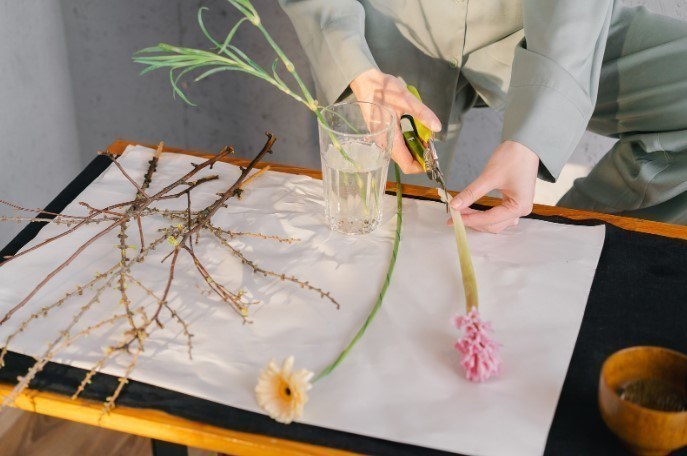
Including care instructions is basic courtesy. The recipient shouldn’t need to search online to keep your gift alive. Good florists send flower food and a printed care card as standard, and you can add a line yourself: “Trim the stems and change the water every couple of days.”
This is a detail I genuinely appreciate about how My Peonika packs bouquets. Their florists assemble each one shortly before it goes out, and it travels in an aqua hydration pack inside a protective box, with flower food, care instructions, and a complimentary card included. They also back it with a 3-Day Freshness Guarantee: follow the care instructions, and if the bouquet wilts within three days, they replace it free. For a sender, that’s peace of mind that the gesture won’t fade before it’s even been appreciated.
Sending Flowers to Men: Yes, Absolutely
Here’s another myth worth retiring: men don’t want flowers. Plenty of men have simply never received any. Ask around and you’ll hear the same story: the first bouquet a man gets is often at his own funeral. Let’s change that.
Etiquette tips for sending flowers to men:
- Think structure and texture. Anthuriums, orchids, eucalyptus, and architectural tropicals look bold and modern. Anthuriums are also tough, often lasting two to three weeks.
- Go monochrome. A single-color arrangement in deep red, white, or green reads clean and confident.
- Consider a box or pot. Many men find a sleek box or a potted arrangement easier to keep on a desk than a vase of loose stems.
- Skip the frills if he would. Ribbons and pastel tissue may not be his thing, but don’t assume. Some men adore peonies.
- Same occasions apply. Birthdays, promotions, recoveries, new fatherhood, and sympathy are all fair game.
Cultural Taboos and Flower Symbolism
America is a wonderfully mixed country, which means the person you’re sending to may carry flower traditions from anywhere. These are the taboos I see trip people up most often.
Chrysanthemums
In the US, mums are a cheerful fall flower. In much of Europe, including France, Belgium, Italy, Spain, and Austria, chrysanthemums are strongly associated with graves and All Saints’ Day. In Japan, China, and Korea, white chrysanthemums are the classic funeral flower. Giving them as a birthday or hostess gift to someone from those cultures can be read as morbid.
Even vs. Odd Stem Counts
In Russia, Ukraine, Belarus, and much of Eastern Europe, an even number of flowers is reserved for funerals and memorials. Gifts for the living use odd numbers: 5, 7, 11, 15. If your recipient grew up with this tradition, a dozen roses (12) can feel like a quiet insult. Once you get past a couple of dozen stems, many people stop counting, but for smaller bouquets this matters a lot. The flip side: when sending sympathy flowers to an Eastern European family, an even count is the respectful choice.
Yellow Flowers
Yellow means friendship and cheer in American flower language. In Russia and some other Eastern European cultures, yellow flowers can suggest separation, betrayal, or an impending breakup. In parts of France, yellow has historically hinted at infidelity. In Mexico, yellow and orange marigolds (cempasúchil) are closely tied to Día de los Muertos and honoring the dead. Yellow isn’t banned, but for a romantic gift to someone from these backgrounds, choose another color.
White Flowers and Other Notes
- White: Celebratory at Western weddings, but associated with mourning in much of East and South Asia. Avoid an all-white bouquet for a Chinese or Japanese recipient’s birthday.
- The number four: In Chinese, Japanese, and Korean cultures, four sounds similar to the word for death. Never send four stems.
- Red carnations: Mother’s Day favorites in the US, but in some European countries they carry political or funerary associations.
- Lilies: Elegant, but widely associated with funerals in the US and Europe, and highly toxic to cats. Skip them for any household with cats.
The DIY move: when you’re unsure, ask a friend from that culture, or simply choose a mixed, multicolor bouquet with an odd number of stems. That combination sidesteps most taboos at once.
Common Mistakes to Avoid
These are the errors I see over and over, usually from well-meaning senders working with generic national order-gatherers or bargain sites:
- Ordering from a “local” site that isn’t local. Some websites take your order and wire it to whatever shop is nearby, keeping a cut. The bouquet that arrives may look nothing like the photo. Check that the florist has a real address in the area.
- Ignoring hospital rules. A beautiful arrangement turned away at the ICU door helps no one. Call first.
- Sending lilies to a cat owner. Even pollen licked from fur can cause kidney failure in cats.
- Delivering to an empty office. Weekend, holiday, and remote-work days mean flowers sitting in a dark lobby.
- Overlooking “in lieu of flowers.” It’s a request, not a suggestion.
- Going anonymous. The recipient spends the day guessing instead of enjoying.
- Sizing out of proportion. A 100-stem display for a new coworker is uncomfortable; three supermarket carnations for a 25th anniversary is worse.
- Waiting until the last minute on peak days. On Valentine’s Day, the florist’s best roses are often reserved days in advance.
- Forgetting the recipient’s phone number. Drivers can’t get past concierge desks or gates without it.
- Heavily scented flowers in small spaces. Hospital rooms, shared offices, and nurseries need gentle fragrance.
Practical Tips for Ordering Flowers Like a Pro
Once you know the etiquette, the ordering itself becomes a pleasure. A few habits that make a real difference:
- Order directly from a studio florist. You get fresher flowers, real designers, and someone to call with questions.
- Know the cutoff time. Same-day delivery usually has an afternoon cutoff. My Peonika, for example, delivers same-day seven days a week for orders placed by 5 PM, and if the flowers are in stock, they can sometimes turn an order around with about an hour’s notice.
- Use the florist’s eye. “Designer’s choice” options let a florist use the freshest stems of the day. My Peonika’s “Artist’s Choice” bouquet lets you set a budget ($116 to $365) and a color palette, and their florists do the rest.
- Budget realistically. As a rough estimate for US florists in 2026, a nice vase arrangement for a birthday or thank-you often runs $75 to $175, sympathy arrangements for the home $100 to $250, and funeral display pieces $200 and up. Luxury and large-stem designs go well beyond that.
- Watch free-delivery thresholds. Many florists waive delivery fees above a certain order size. At My Peonika, orders of $190 and up ship free within 10 miles of the studio.
- Choose seasonal flowers when you can. They’re fresher and often better value. Peonies peak in late spring, anemones in spring, while roses and orchids are reliable year-round.
- Plan big events separately. Wedding and event florals are a different service from gift delivery and typically need advance planning, not a same-day order.
Real Examples: Three Deliveries, Three Decisions
Here’s how the principles above play out in practice. These are illustrative scenarios, the kind of decisions I walk friends through all the time.
Example 1: The Coworker in the Hospital
Picture this: a colleague has emergency surgery and lands in a step-down unit. The team wants to send flowers. The first instinct is a big, fragrant arrangement with lilies and a bunch of latex balloons. Instead, someone calls the nurses’ station and learns that flowers are allowed on that floor, but balloons are not, and space is tight. The team chooses a compact, low-scent arrangement of roses and hydrangeas in a vase, around $150, and a card signed by everyone: “The office is too quiet without you. Heal up, we’ll keep your chair warm.” When she’s discharged four days later, a second, smaller bouquet arrives at her home. Total spend stays reasonable, and both deliveries actually get enjoyed.
Example 2: The Friend Who Lost Her Grandmother
Imagine a close friend whose family is Ukrainian Orthodox loses her grandmother. You know the family will have a church service. As a friend, you’re not sending funeral pieces; that’s for the immediate family. You send a sympathy arrangement to her apartment the day after the funeral, choosing white and soft lavender blooms. You count carefully and make the stem count even, which she notices and quietly appreciates. A month later, you send a short text and a small bouquet of white roses, just to say you’re still thinking of her. That second gesture is the one she mentions years later.
Example 3: The Long-Distance Birthday in Miami
Say your sister lives in a Brickell high-rise and you’re two thousand miles away. You order from a studio florist that serves Brickell, choose a peach-and-coral palette because she loves warm colors, and add her phone number plus the concierge instructions. The order goes in at 2 PM on her birthday, comfortably before the cutoff. The bouquet arrives hydrated, boxed, with care instructions and your handwritten-style card: “Happy birthday from your favorite (only) brother. Dinner’s on me when I visit.” It’s the same flowers anyone could send. The thought behind the details is what makes it yours.
That last scenario is a good place to mention My Peonika by name, because they’re the kind of studio I’d trust with it. Their florist studio is in Hallandale Beach and they deliver across the Miami area, including Brickell, Miami Beach, Aventura, Sunny Isles Beach, Coconut Grove, Coral Gables, and more, plus Miami-area hospitals. Their flowers come from growers in the Netherlands, Ecuador, Kenya, and Colombia, and they keep peonies available year-round when in stock, which is a small miracle for peony lovers in a tropical climate.
Flower Etiquette FAQ
How soon after a death should I send sympathy flowers?
For the family home, within the first week is typical, but there’s no expiration date on kindness. Many families say the most meaningful flowers arrived weeks later, after the initial wave of support faded. For funeral flowers, coordinate with the funeral home so they arrive a few hours before the service.
Is it rude to send flowers to someone at work?
Not at all, as long as you check the workplace accepts deliveries and you choose a moderate, low-scent arrangement with a professional card. Save romantic flowers and intimate messages for the home address.
Should I tip the flower delivery driver?
Tipping is optional and isn’t expected from the recipient. Some senders add a tip at checkout if the florist offers the option, especially for holiday deliveries or difficult addresses. It’s a kind gesture rather than an obligation.
What flowers are safest when I don’t know the recipient’s preferences?
A mixed bouquet in soft or medium tones, with an odd number of stems, no lilies, and moderate fragrance. Roses, ranunculus, hydrangeas, and lisianthus are widely loved and carry few negative associations across cultures.
Conclusion: Your Flower Delivery Etiquette Checklist
Instead of a recap, here’s the checklist I run through before every order. Screenshot it and you’ll never send an awkward bouquet again. Flower delivery etiquette really comes down to these ten questions:
- Is this the right moment, or would a later delivery mean more?
- Does the recipient’s faith or culture shape what’s appropriate (no flowers, even stems, avoid certain colors)?
- If it’s a hospital, did I call to confirm flowers and balloons are allowed on that unit?
- Is the size proportional to our relationship?
- Will it arrive ready to enjoy, in a vase, box, or hydration pack, with care instructions?
- Have I avoided lilies for cat owners and strong scents for small or shared spaces?
- Does the card sound like me, include my name, and say something specific?
- Did I include a full address, unit number, phone number, and building notes?
- Am I ordering before the cutoff, and well ahead on peak holidays?
- Am I buying from a real local florist with a physical studio and a freshness guarantee?
Get those right and the old myth becomes true after all: the thought really does count, because it arrives exactly as you meant it.